
 03 8676 1855
Guide
Self-Bunded Diesel Tanks Explained
Ask anyone installing fuel storage today what kind of tank, and the answer is almost always the same: self-bunded. The term is industry shorthand that deserves a plain-English explanation, because the design solves the single biggest problem in fuel storage — what happens when a tank leaks.
A tank inside a tank
A bund is a containment barrier — traditionally a concrete or earth wall built around a fuel tank, sized so that if the tank failed, the fuel would pool inside the bund instead of spreading across the site and into the stormwater system. Bunds work, but they are civil works: designed, poured, maintained, and permanently attached to one spot on your site.
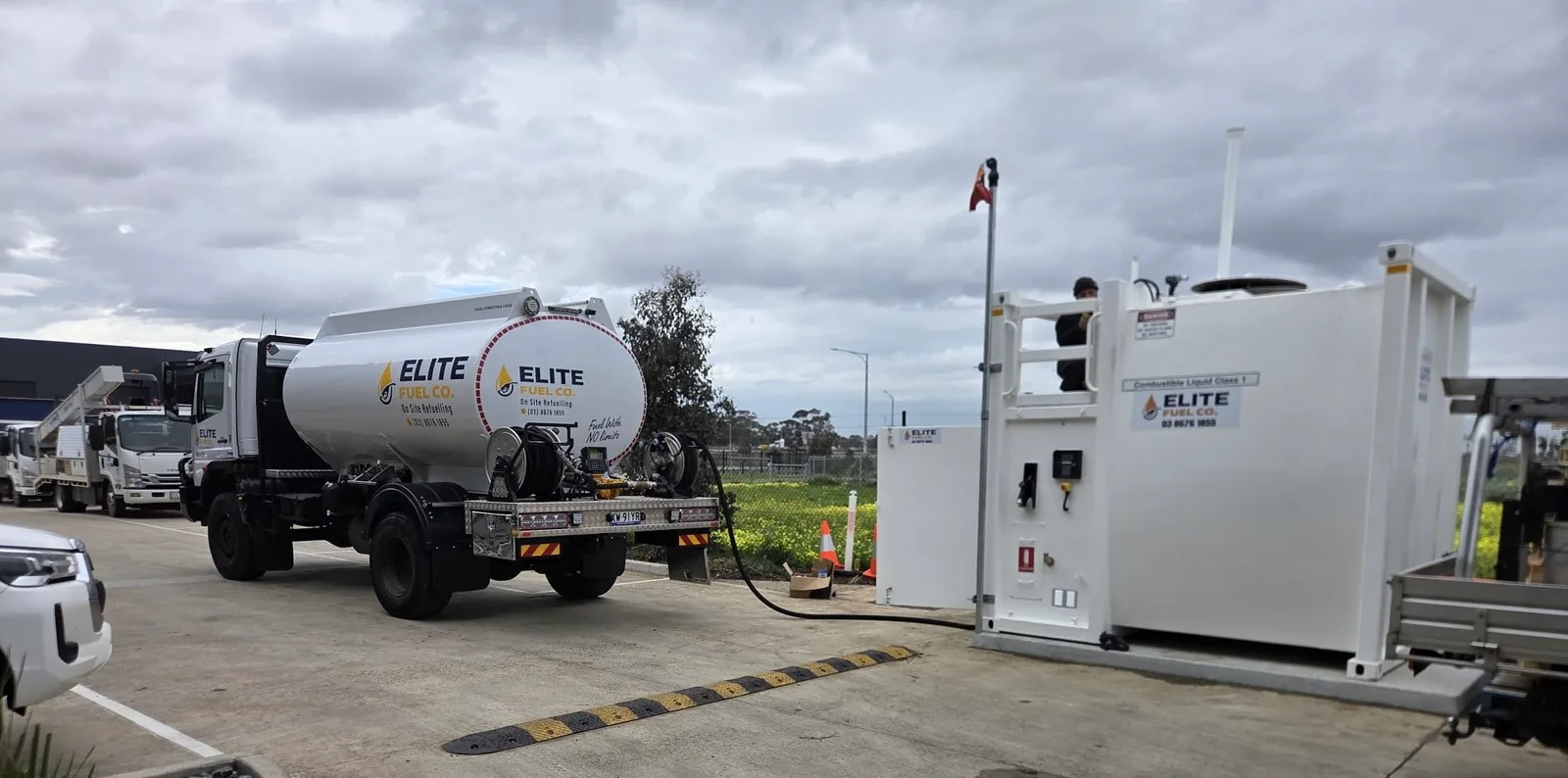
A self-bunded tank builds that containment into the vessel. The fuel sits in an inner tank; a second, fully enclosed outer tank wraps around it, sized to capture the inner tank's contents if it ever lets go. Leak, weep or overfill — the fuel lands in the interstitial space, not on the ground. The result is storage that arrives on a truck, sits on hardstand, and takes its containment with it if it ever moves.
Why it became the default
- Containment is engineered, not improvised. The weakest point of many older setups is a bund that cracked, filled with rainwater or was never quite big enough. A sealed double wall removes that whole category of doubt — and keeps rain out of the containment space.
- No civil works. Level hardstand and safe tanker access, and the tank is working the day it lands. No concrete pour, no waiting on trades.
- Relocatable. Site moves, stages finish, yards get reorganised — the tank moves too, containment included. A poured bund stays where you left it.
- Easier conversations. With insurers, auditors and regulators alike, "self-bunded" answers the containment question in one word. The requirements in AS 1940 still apply to placement and handling — but the containment line item is settled by design.
Sizing one honestly
Self-bunded tanks span everything from roughly a thousand litres to well north of a hundred thousand, so "what's available" is never really the question — what you burn is. Start from monthly consumption, then think in terms of delivery cadence: the right tank is the one where a sensible refill schedule keeps you comfortably ahead of your busiest period, with enough margin that running low is a calendar event rather than an emergency. Oversizing wastes money and leaves fuel sitting long enough that shelf life starts to matter; undersizing puts you back on the phone every week.
Placement still deserves thought — hardstand, separation, tanker access, drains — and that discipline is the subject of How to Store Diesel Safely On-Site. A self-bunded tank answers the containment question; it does not place itself.
Hire the tank, keep the capital
This is exactly what our fuel storage & tank hire service supplies: a self-bunded tank delivered to your site and kept filled on a schedule, every delivery metered and recorded. You get compliant-grade storage and a fuel supply in one arrangement — without buying the tank, and without your fuel uptime depending on whoever remembered to reorder.
Talk to us about tank hireGeneral guidance only. Tank specifications, containment capacities and siting requirements are matters for the tank's certification and AS 1940 — confirm specifics against the actual vessel and your site rather than a general guide.
FAQs
Self-bunded tanks, answered
What does "self-bunded" actually mean?
It means the spill containment is built into the tank itself: an inner tank holds the fuel and a fully enclosed outer tank surrounds it, sized to capture the inner tank’s contents if it ever leaks. The "bund" — the containment wall that would otherwise be built around a tank — travels with the vessel instead.
Do I still need a concrete bund with a self-bunded tank?
Generally no — that is the point of the design. The outer tank provides the secondary containment a masonry or earth bund would otherwise supply. You still need everything else good storage requires: sound placement, separation distances, spill readiness and inspections. The tank solves containment, not the whole discipline.
Can a self-bunded tank be moved later?
Yes, and it is one of the strongest arguments for them. Because the containment is part of the tank, relocating it does not mean abandoning a concrete bund and building another. For hired tanks that flexibility is built into the arrangement; sites that grow, shrink or move keep their storage matched to the work.
What size tank do I need?
Work backwards from monthly usage and delivery cadence rather than guessing. A useful shape: enough capacity that a sensible delivery schedule keeps you comfortably supplied through your busiest stretch, with margin so running low is never urgent. Self-bunded tanks come in sizes from around a thousand litres to well over a hundred thousand, so the range is rarely the constraint — your usage number is. We help customers size this against real consumption.
Should I hire a self-bunded tank or buy one?
Hiring puts a tank on site without the capital outlay, and typically bundles the things ownership leaves with you — supply, monitoring and keeping the thing filled. Buying can suit a permanent site with stable long-term demand and the appetite to manage its own asset. We currently offer tank hire with scheduled filling; if you are weighing up a purchase, we are happy to talk through what your usage actually justifies.
More guides
Keep reading
Does Diesel Go Off? How Long Diesel Lasts
How long diesel stays usable in storage, what actually degrades it, and how to keep a site tank in good condition.
Is Diesel Flammable? Safe Storage & Handling
Why diesel behaves differently to petrol, what the flash point actually means, how to store it safely on site, and what to do if there is a spill.
What Is AdBlue? A Fleet Operator’s Guide
What AdBlue does, why modern diesel fleets need it, bulk versus packaged supply, and what happens when a truck runs dry.
Where to Buy AdBlue in Melbourne
Every way to get AdBlue in Melbourne — service stations, drums, IBCs and bulk delivery — and which one actually suits the size of your fleet.
Fuel Management for Fleets: What It Actually Means
Where fuel spend really leaks, what fuel management covers beyond the price per litre, and how fuel cards and on-site refuelling compare.
Petrol in a Diesel Engine? What to Do
What actually happens when petrol goes into a diesel tank, the steps that limit the damage, and what to do about AdBlue in a fuel tank.
How to Store Diesel Safely On-Site
Where a diesel tank should sit, what the storage rules actually ask of you, and the habits that keep stored fuel safe and usable.