
 03 8676 1855
 Bulk storage on your site
We set your site up with an AdBlue tank and keep it filled, so AdBlue is simply there when your vehicles and machinery need it.
AdBlue Supply
AdBlue
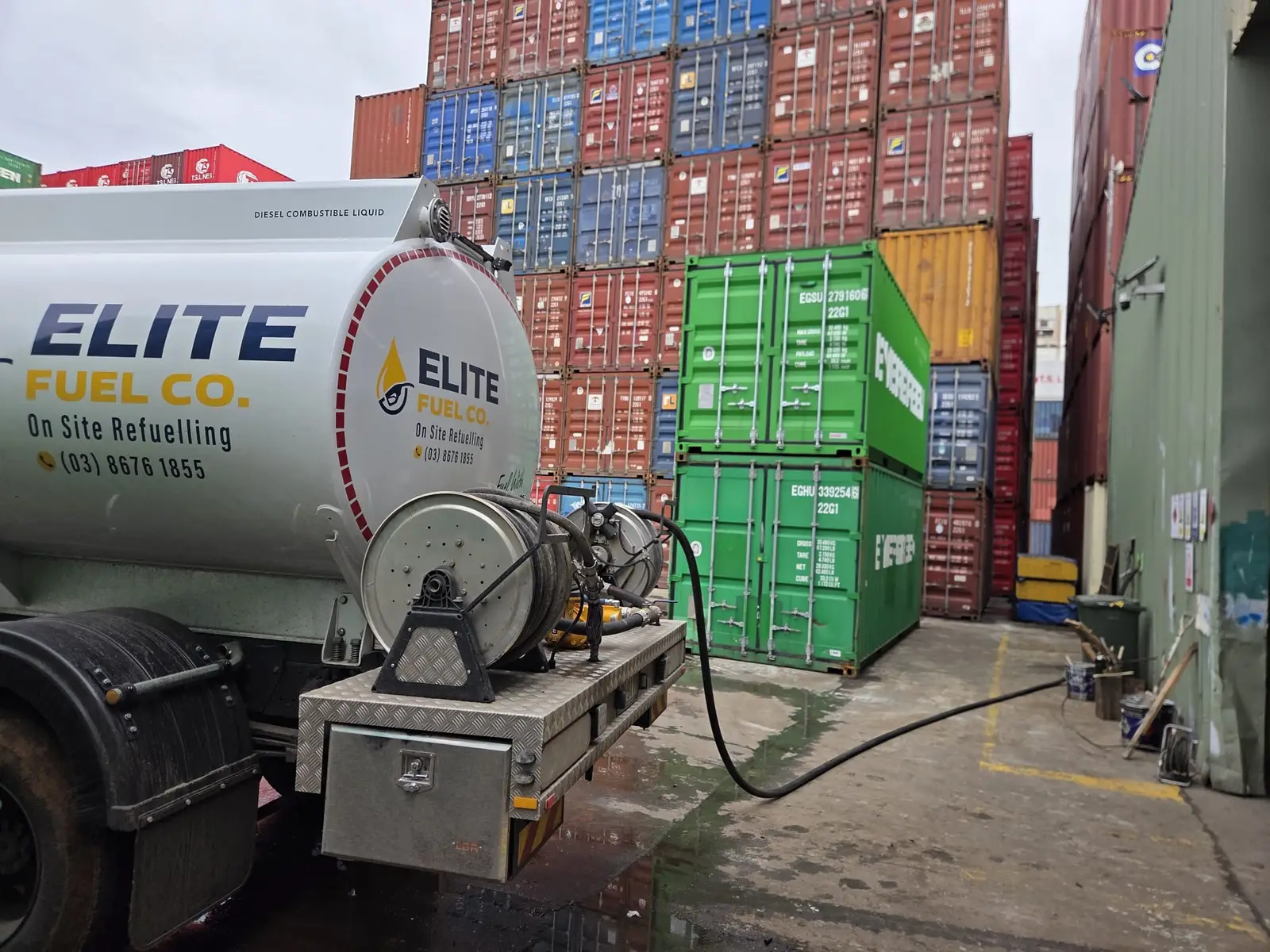
About the service
AdBlue is a diesel exhaust fluid (DEF) that modern diesel engines rely on to run cleanly. Any vehicle or machine fitted with an SCR (Selective Catalytic Reduction) emissions system draws AdBlue from its own separate tank and injects it into the exhaust to break down harmful emissions — so it is used up independently of your diesel and has to be topped up in its own right. Miss it, and a modern engine will de-rate or stop.
Elite Fuel Co. keeps that supply simple. We set your site up with bulk AdBlue storage — a tank at your yard, depot or workshop that we keep filled — so AdBlue is simply there when a vehicle needs it, rather than something someone has to remember to go out and buy. For operators using it steadily that is cheaper per litre than picking up bottles or containers as you go, and it suits transport fleets, trucks, plant and agricultural machinery alike.
Quality matters with AdBlue: it must be handled and stored to ISO 22241, because contamination damages the SCR system it is meant to protect. We handle it properly, so what reaches your tank is right — keeping your fleet compliant and moving.
Talk to us about AdBlue supply or get in touch to work out what size tank suits your usage.
What you get
We set your site up with an AdBlue tank and keep it filled, so AdBlue is simply there when your vehicles and machinery need it.
For anyone using AdBlue steadily, bulk on-site storage works out cheaper per litre than picking up bottles or containers from a service station or local store.
No purchase orders, no trips out for containers and no one discovering the fleet is out of AdBlue at the wrong moment — it is on site and it stays topped up.
AdBlue is stored and dispensed to ISO 22241, protecting it from contamination that can damage your SCR system — so what goes into your tank is right.
The basics
AdBlue is the common name for a diesel exhaust fluid (DEF) — a high-purity solution of roughly 32.5% urea and 67.5% deionised water. It is not a fuel additive and never mixes with your diesel: it is carried in its own tank and metered into the exhaust by the engine. Inside the Selective Catalytic Reduction (SCR) catalyst it reacts with the harmful oxides of nitrogen (NOx) in the exhaust and converts them into ordinary nitrogen and water vapour before they leave the tailpipe — which is how a modern diesel meets its emissions limits.
AdBlue is held in a dedicated tank with its own blue-capped filler, kept completely separate from the diesel.
The engine injects a fine mist of AdBlue into the hot exhaust stream ahead of the SCR catalyst — the amount matched to how hard the engine is working.
In the catalyst the urea drives a reaction that turns harmful NOx into harmless nitrogen and water vapour, so the vehicle runs cleanly and stays compliant.
Which fleets need it? Any diesel fitted with an SCR system — broadly the Euro 5 and Euro 6 trucks, buses, plant and machinery sold across Australia since around 2016. A quick tell is a second, blue filler cap beside the diesel inlet; your vehicle handbook confirms whether AdBlue is required and names the correct fluid.
Quality & handling
AdBlue's job is to protect an expensive emissions system, so its own purity matters just as much. ISO 22241 is the international standard that sets the composition, purity and handling requirements for DEF — and it exists because AdBlue spoils easily. Small amounts of diesel, dust, cleaning chemicals or residue from the wrong container can contaminate it, and contaminated AdBlue can block injectors and damage the very SCR catalyst it is meant to protect.
That is why AdBlue has to be kept in dedicated, contamination-free equipment and never decanted through funnels or hoses used for other fluids. The AdBlue we supply is manufactured to the ISO 22241 specification, and it is handled with equipment kept solely for DEF — so what reaches your tank is clean and to standard.
How it works
The arrangement is deliberately simple. Rather than sending someone out for AdBlue whenever it runs low, your site holds its own bulk supply and we keep it topped up.
Why Elite Fuel Co.
Most fleets end up sourcing AdBlue the hard way — a run to the service station or a parts counter whenever someone notices it is low, at the worst price per litre available. We take it off the list entirely by putting the supply on your site and keeping it filled, alongside looking after your diesel. One supplier to deal with, and one less thing anyone has to remember.
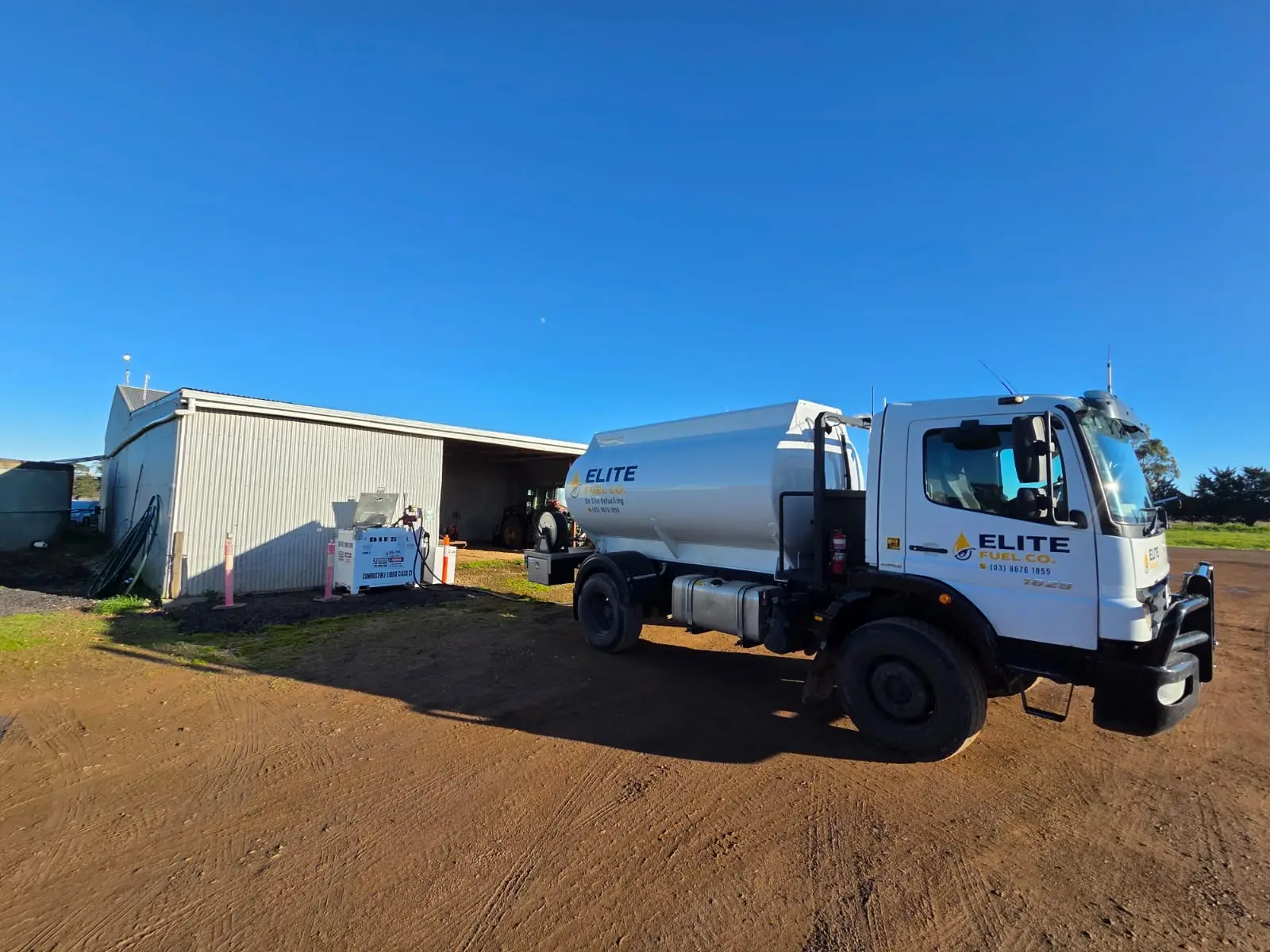
Set your site up with bulk AdBlue storage that stays topped up.
FAQs
AdBlue is a diesel exhaust fluid (DEF) — a high-purity solution of urea and demineralised water — used by modern diesel engines fitted with Selective Catalytic Reduction (SCR) emissions systems. The engine draws AdBlue from a separate tank and injects it into the exhaust to break down harmful nitrogen oxides so the vehicle runs cleanly and stays emissions-compliant. If your trucks, plant or machinery have an SCR system and a dedicated AdBlue filler, they need a reliable AdBlue supply alongside their diesel.
As bulk storage on your own site. We set you up with an AdBlue tank at your yard, depot or workshop and keep it filled, so AdBlue is on hand rather than something anyone has to go out and buy. AdBlue is used up separately from diesel and has to be topped up in its own tank, which otherwise means someone making a trip for it — having it stored on site removes that entirely.
For steady users, yes. Buying AdBlue in bottles or containers from a service station or local store as you need it is the dearest way to buy it per litre, and it also carries the hidden costs — the trips, the purchase orders, and the risk of running out. Bulk storage on site brings the per-litre cost down and takes the errand away. Below a fairly low usage level it is not worth it, and we will tell you if that is where you sit.
Running low on AdBlue will de-rate a modern diesel engine — the vehicle limits its power to protect the emissions system — and if the tank runs dry the truck may not restart until it is refilled. That means downtime and disruption. Keeping a bulk supply on site means the tank is topped up before anyone notices it was getting low, which keeps the fleet compliant and moving.
AdBlue has a finite shelf life. Kept sealed, cool and out of direct sunlight it typically stays within specification for around a year; heat and prolonged sunlight break the urea down faster and shorten that. Store it somewhere between roughly −5 °C and 25 °C, keep containers closed so dust and moisture cannot get in, and only ever decant it through dedicated, DEF-only equipment. For a fleet using it steadily, a bulk tank on site turns over quickly enough that shelf life never becomes a concern — which is one of the quieter advantages over buying containers and storing them in a corner of the workshop.
It can — AdBlue freezes at about -11 °C, a little colder than water because of the urea in it. That is not a problem: it thaws and is completely usable again with no loss of quality, and vehicles with SCR systems are designed to warm and thaw the AdBlue tank automatically, so the engine keeps running normally. With stored AdBlue, simply let it thaw on its own before use — never heat it aggressively, and never add anything to stop it freezing, as that would put it out of specification.
We supply AdBlue right across Melbourne, with a focus on the northern and western industrial corridors — Campbellfield, Somerton, Thomastown, Epping, Broadmeadows, Laverton, Truganina and the surrounding suburbs — for transport fleets, trucks, plant and agricultural operators.
Related guides
What it does, how much you will use, storage, and what happens when a truck runs dry.
Read the guide →Servos, bottles, drums, IBCs or bulk delivery — how to work out which format actually suits your volume.
Read the guide →More from Elite Fuel Co.

Scheduled and on-demand bulk diesel delivered straight to your tanks, depot or job site across Melbourne.

Wet-hire mobile refuelling that fuels your vehicles and plant where they park — no more after-hours fuel runs.

Self-bunded diesel tanks on your site, filled and monitored — safe, compliant fuel storage without the capital outlay.
Delivering across Melbourne's northern & western suburbs — see your area.